How I Found Balance: My Real Talk on Qigong for Body Tuning
Ever feel like your body’s out of sync no matter what you try? I’ve been there—tired, tense, and stuck in a loop of quick fixes that never last. Then I discovered qigong, not as a magic cure, but as a daily reset for my energy and focus. It’s not flashy, but over time, I noticed real shifts: better sleep, less stress, and a stronger connection to my body. This is my honest journey—not a textbook guide, but a real-life look at how qigong helped me tune up from the inside out.
The Breaking Point: Why I Needed a New Approach to Health
For years, I believed I was doing everything right. I ate balanced meals, walked daily, and even tried yoga and strength training. Yet, I still woke up exhausted, my mind clouded by a persistent mental fog that no amount of coffee could clear. Simple tasks felt overwhelming, and I carried a low hum of tension in my shoulders and jaw that never seemed to let go. I visited doctors, ran blood tests, and was told repeatedly there was “nothing wrong.” But I knew something was off. I wasn’t sick, but I wasn’t truly well either.
It wasn’t until I hit a true breaking point—missing work due to fatigue after a seemingly routine week—that I realized my approach to health was incomplete. I had been focusing on external markers: calories, steps, workouts. But I had ignored the internal signals: energy flow, nervous system balance, and emotional resilience. Western fitness culture had taught me to push, to achieve, to burn. What I needed wasn’t more effort, but restoration. I began searching for practices that emphasized harmony over intensity, presence over performance. That’s when I first heard about qigong.
Qigong emerged in my research not as a trendy wellness fad, but as a centuries-old tradition rooted in balance. Unlike high-intensity regimens that left me more drained, qigong promised gentle, sustainable support for the body’s natural rhythms. It wasn’t about fixing a single symptom, but about cultivating a state of coherence—where breath, movement, and awareness worked together to restore the body’s innate ability to regulate itself. Skeptical but desperate for change, I decided to give it a real try, not as a last resort, but as a new beginning.
What Is Qigong? Demystifying the Ancient Practice
When I first started exploring qigong, I wasn’t sure what to expect. Was it meditation? Exercise? Some kind of mystical energy work? The truth is, it’s a blend of all three, but grounded in practical, observable effects. At its core, qigong (pronounced “chee-gong”) is the practice of cultivating and balancing qi—the vital life force or energy that, according to Traditional Chinese Medicine (TCM), flows through pathways in the body called meridians. When qi flows smoothly, the body functions optimally. When it’s blocked or depleted, we experience fatigue, tension, or imbalance.
Qigong is not about supernatural powers or esoteric beliefs. It’s a systematic method that uses coordinated breathing, gentle movement, and focused intention to enhance the body’s self-regulating abilities. Think of it as a form of internal hygiene—just as brushing your teeth maintains oral health, qigong helps maintain energetic and physiological balance. It’s been used for over 4,000 years in Chinese culture not as a treatment for disease, but as a daily practice for longevity, resilience, and vitality.
One of the most important things I learned early on is that qigong is accessible to everyone, regardless of age, fitness level, or flexibility. You don’t need special equipment or a studio. You don’t have to believe in anything abstract to benefit. The movements are slow, deliberate, and often repetitive—designed to quiet the mind and awaken the body’s awareness. Over time, this consistent attention helps recalibrate the nervous system, shifting it from a state of constant alert (sympathetic dominance) to one of rest and repair (parasympathetic activation).
Modern science is beginning to validate what practitioners have known for generations. Studies have shown that regular qigong practice can reduce cortisol levels, improve heart rate variability, enhance immune function, and support mental clarity. It’s not a replacement for medical care, but a complementary practice that empowers individuals to take an active role in their well-being. For me, understanding qigong as a bridge between ancient wisdom and modern health made it feel not only credible but deeply relevant.
Body Tuning 101: How Qigong Aligns Energy and Function
The term “body tuning” might sound abstract, but in the context of qigong, it’s a powerful metaphor. Just as a musician tunes an instrument to ensure each string vibrates at the right frequency, qigong helps bring the body’s systems—nervous, circulatory, muscular, and organ—into harmonious alignment. It’s not about fixing one isolated part, but about improving the overall coherence of how everything works together. When your body is “in tune,” you move with ease, think with clarity, and respond to stress with resilience rather than reactivity.
One of the first changes I noticed after a few weeks of practice was a reduction in muscle tension. My shoulders, which used to carry the weight of stress like permanent anchors, began to relax. I didn’t stretch more or get extra massages—this shift came purely from the way qigong encouraged me to stand, breathe, and move with awareness. The practice taught me to recognize where I was holding tension and how to release it through subtle adjustments in posture and breath. Over time, this led to better posture, fewer headaches, and a sense of physical lightness I hadn’t felt in years.
Beyond the musculoskeletal benefits, I also experienced improvements in digestion and sleep. These weren’t immediate, but they emerged gradually as part of a larger pattern of regulation. In TCM, each organ system is associated with specific energy pathways and emotional states. For example, the liver is linked to smooth qi flow and emotional flexibility, while the spleen supports digestion and mental focus. When stress disrupts these systems, we may experience bloating, irritability, or brain fog. Qigong helps restore balance by promoting circulation and reducing the physiological impact of chronic stress.
From a Western medical perspective, this makes sense. Chronic stress activates the hypothalamic-pituitary-adrenal (HPA) axis, leading to elevated cortisol, inflammation, and disrupted sleep cycles. Qigong, through its emphasis on slow, rhythmic breathing and mindful movement, helps downregulate this stress response. It activates the vagus nerve, which plays a key role in calming the body and improving heart rate variability—a marker of cardiovascular and emotional resilience. In this way, qigong doesn’t just make you feel better—it supports measurable improvements in the body’s ability to self-regulate.
My First Moves: Simple Qigong Practices That Actually Worked
When I began, I was overwhelmed by the variety of qigong forms available. Some looked complex, others too abstract. I knew I needed something simple, sustainable, and effective. I started with three foundational practices that are widely recommended for beginners: Standing Like a Tree (Zhan Zhuang), Lifting the Sky, and the Eight Brocades (Ba Duan Jin). Each offered a different entry point into the world of qigong, and together, they formed the backbone of my daily routine.
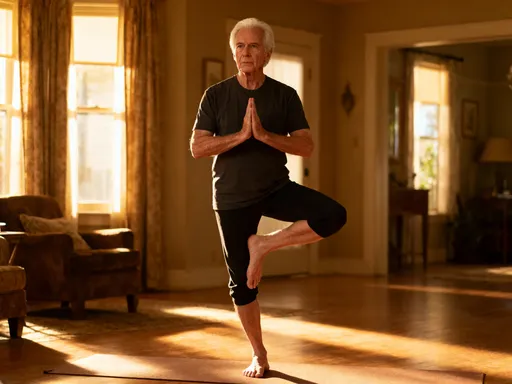
Standing Like a Tree, or Zhan Zhuang, was the first practice I tried. It involves standing with feet shoulder-width apart, knees slightly bent, arms rounded as if hugging a large ball, and focusing on deep, natural breathing. At first, I couldn’t believe something so still could be powerful. I felt awkward, restless, and unsure of what I was supposed to “do.” But I committed to five minutes a day. Over time, I began to notice subtle sensations—tingling in my hands, warmth in my lower abdomen, a sense of groundedness in my feet. This practice taught me that stillness is not passive; it’s an active form of listening to the body. It became my anchor, a way to center myself before starting the day.
Lifting the Sky was my next step. This gentle movement involves raising the hands slowly in front of the body, palms up, as if lifting an invisible weight, then lowering them with control. The motion is coordinated with the breath—inhaling as the hands rise, exhaling as they descend. At first, I focused on the mechanics: keeping my spine straight, shoulders relaxed, movements smooth. But soon, I began to feel a rhythmic flow, almost like a wave moving through my torso. This practice helped me connect breath with motion, creating a sense of internal rhythm. I noticed that after doing Lifting the Sky, my mind felt clearer and my energy more directed.
The Eight Brocades, or Ba Duan Jin, is a complete set of eight qigong exercises designed to stretch, strengthen, and energize the body. I started with just two or three of the movements, practicing them slowly and repeatedly. Each exercise targets different meridians and organ systems—for example, “Separating Heaven and Earth” helps regulate digestion, while “Drawing the Bow to Shoot the Eagle” opens the chest and supports lung function. What made this set so effective was its structure: it felt like a full-body tune-up, systematic and balanced. I didn’t need to do all eight at once; even five minutes a day made a difference. Consistency, not perfection, was the key. I learned to let go of the need to “get it right” and instead focus on showing up, breathing, and moving with intention.
Breath Is the Bridge: Mastering the Invisible Half of Qigong
If movement is the visible part of qigong, breath is the invisible engine that powers it. One of the most transformative realizations in my journey was understanding that breath is not just automatic—it’s a tool. In qigong, we practice diaphragmatic breathing, also known as belly breathing, where the lower abdomen expands on the inhale and gently contracts on the exhale. This contrasts with the shallow, chest-based breathing many of us adopt under stress, which keeps the body in a state of low-grade alert.
Learning to breathe deeply was harder than I expected. At first, I had to consciously remind myself to drop my shoulders, relax my jaw, and let my belly rise. It felt unnatural, even uncomfortable. But within a few weeks, diaphragmatic breathing became more automatic. I began to notice its effects beyond practice time—when I was stuck in traffic, facing a stressful email, or lying awake at night. A few slow, deep breaths could shift my entire state. My heart rate would slow, my thoughts would quiet, and I’d feel a sense of control return.
What makes breath so powerful in qigong is its ability to synchronize with movement and intention. When breath and motion are aligned, the practice becomes more than physical exercise—it becomes a form of moving meditation. For example, in Lifting the Sky, the inhale supports the upward motion, gathering energy, while the exhale grounds the downward movement, releasing tension. This rhythmic coordination enhances circulation, oxygenates the blood, and calms the nervous system. It also trains the mind to stay present, reducing the tendency to ruminate on the past or worry about the future.
Over time, I realized that qigong wasn’t something I only did on the mat—it became a portable practice. I could use conscious breathing while folding laundry, waiting in line, or preparing dinner. This integration made the benefits more sustainable. Instead of relying on a single daily session to “reset” me, I was cultivating a continuous state of awareness. Breath became my anchor, a way to return to balance no matter where I was or what I was doing.
Building a Sustainable Routine: From 5 Minutes to Daily Ritual
One of the biggest challenges I faced was consistency. Like many people, I had tried wellness practices before that fizzled out after a few weeks. I knew that for qigong to work, I needed to make it a habit, not a chore. My breakthrough came when I stopped aiming for long sessions and started with just five minutes a day. This tiny commitment removed the pressure of “finding time” and made it easy to stick with.
I chose morning as my anchor time, right after brushing my teeth. This habit stacking—linking qigong to an existing routine—helped it become automatic. I didn’t need motivation; I just followed the sequence: wake up, use the bathroom, brush teeth, then stand quietly and breathe. Some days, I only did Standing Like a Tree. Other days, I added Lifting the Sky or a few movements from the Eight Brocades. The key was showing up, not the duration or complexity of the practice.
To track progress, I stopped focusing on numbers. I didn’t measure weight, calories, or workout intensity. Instead, I paid attention to subtle shifts: Did I sleep better? Was I less reactive to stress? Did I feel more present with my family? I kept a simple journal, noting how I felt each morning after practice. Over time, the patterns became clear. On days I practiced, I had more energy, better focus, and a greater sense of calm. On days I skipped, I noticed the difference—more tension, more mental noise.
Patience was essential. Qigong doesn’t deliver dramatic, overnight results. Its power lies in accumulation—small, consistent actions that build resilience over time. I had to let go of the expectation of quick fixes and embrace the process. There were days I felt restless, days I doubted if it was working. But I kept going, trusting that the benefits were happening beneath the surface. After three months, the changes were undeniable. What started as a five-minute experiment had become a non-negotiable part of my day—a daily ritual that grounded me and prepared me for whatever the day might bring.
Beyond the Mat: How Qigong Changed My Lifestyle Mindset
The most surprising outcome of my qigong practice wasn’t just physical relief—it was a shift in how I approached health altogether. Before, I viewed wellness as something reactive: I’d address issues only when they became unbearable. Now, I see it as ongoing maintenance, like tending a garden. Just as plants need regular watering and sunlight, my body thrives on consistent care. Qigong taught me to listen to subtle cues—fatigue, tension, mood shifts—before they escalate into bigger problems.
This proactive mindset spilled over into other areas of my life. I became more aware of my posture while sitting at the computer, more intentional about taking breaks, and more attuned to how food and sleep affected my energy. I didn’t overhaul my lifestyle overnight, but small, mindful choices added up. I started moving more throughout the day, not through intense workouts, but through gentle stretches and walking with awareness. I prioritized rest without guilt, recognizing that recovery is not laziness—it’s essential to long-term well-being.
Perhaps the deepest change was in my relationship with myself. Qigong fostered a sense of self-compassion. Instead of criticizing my body for not being stronger or thinner, I began to appreciate it for its resilience, its ability to heal, and its quiet wisdom. The practice became a daily act of honoring my body, not fixing it. I stopped chasing perfection and started valuing presence.
I don’t claim that qigong is a cure-all. It’s not a substitute for medical treatment, and anyone with specific health concerns should consult a healthcare provider. But for me, it filled a gap that other approaches had missed. It offered a way to restore balance from the inside out, not through force, but through gentle, consistent attention. It gave me tools to navigate stress, maintain energy, and stay connected to myself in a world that often pulls us in too many directions.
Qigong didn’t transform me overnight, but it gave me tools to stay balanced in a chaotic world. This journey isn’t about perfection—it’s about showing up, tuning in, and trusting the process.