How I Kept My Balance—And My Independence—Through the Years
We don’t think about balance until we start losing it. For me, it was a near fall on the stairs that opened my eyes. Balance isn’t just about staying upright—it’s about staying in control of your daily life, especially when managing long-term health conditions. Over time, I learned that small, consistent moves make a big difference. This is my journey of maintaining stability, not just on my feet, but in life—through smarter habits, awareness, and daily practice that anyone can follow.
The Moment Everything Shifted
It happened on an ordinary Tuesday morning. I was halfway down the staircase inside my home, coffee mug in hand, when my foot slipped slightly on the edge of a step. I caught myself against the railing, heart pounding, but the moment left a lasting impression. I hadn’t fallen, but the near-miss shook me. That small stumble was not just a fluke—it was a signal. I realized I had been compensating for subtle shifts in my balance without even noticing. For years, I had managed my type 2 diabetes with medication and diet, but no one had ever told me how closely it was tied to my sense of stability.
This incident forced me to confront an uncomfortable truth: balance is not something we can take for granted, especially as we age or live with chronic conditions. The ability to stand, walk, and move without fear is foundational to independence. Yet, many people, particularly women between the ages of 30 and 55 who are managing multiple roles at home and work, overlook early signs of instability. A wobble here, a near trip there—these are not just annoyances. They can be early warnings of deeper physical changes that, if unaddressed, may lead to serious falls, injuries, or loss of autonomy.
What made this moment transformative was not the fall itself, but the realization that balance is not passive. It’s not something we either have or don’t. It’s a dynamic system that can be strengthened, just like any other part of the body. The turning point was shifting from fear to action. Instead of dismissing the incident as a one-time scare, I began to ask questions: Why did I lose stability? Could this happen again? And most importantly, what could I do to prevent it? That curiosity led me down a path of learning, practice, and ultimately, empowerment.
Why Balance Matters More Than You Think
Beyond the obvious risk of falling, balance plays a critical role in overall health and quality of life. Many people assume that balance is simply about coordination or muscle strength, but it’s actually a complex integration of multiple body systems working in harmony. When any part of this system is compromised—due to age, illness, or inactivity—the effects can ripple through daily life. Simple tasks like carrying groceries, stepping into the shower, or walking on uneven ground become more challenging and potentially dangerous.
For individuals managing chronic conditions such as diabetes, arthritis, or neurological disorders like peripheral neuropathy, balance issues are especially common. In diabetes, for example, high blood sugar levels over time can damage nerves in the feet and legs, a condition known as diabetic neuropathy. This nerve damage reduces sensation, making it harder to detect shifts in position or surface changes. As a result, the body’s ability to make automatic corrections to maintain balance is impaired. Similarly, arthritis can limit joint mobility and cause pain, altering gait and posture, which in turn affects stability.
Research shows that adults with chronic health conditions are at significantly higher risk of falls. According to the Centers for Disease Control and Prevention (CDC), one in four adults aged 65 and older falls each year, and many of these falls result in serious injuries such as fractures or head trauma. But the risk begins much earlier. Even in midlife, subtle declines in balance can set the stage for future problems. The good news is that fall risk is not inevitable. Studies consistently demonstrate that balance training can reduce fall rates by up to 30 percent, even among high-risk populations. This means that proactive steps taken today can have a measurable impact on long-term safety and independence.
What many don’t realize is that balance is not just a physical skill—it’s a marker of overall health. When balance starts to falter, it can indicate underlying issues with muscle strength, joint function, vision, or neurological health. Addressing balance, therefore, is not just about preventing falls. It’s about maintaining the ability to live fully—to play with grandchildren, garden, travel, or simply move through the day with confidence. It’s about preserving dignity and self-reliance, which are deeply tied to emotional well-being.
The Science Behind Stability
Understanding how the body maintains balance begins with recognizing the three primary systems involved: the vestibular system in the inner ear, the visual system, and the somatosensory system, which includes nerve feedback from the feet and joints. These systems constantly communicate with the brain to create a real-time map of the body’s position in space. When you stand still, your inner ear detects head motion, your eyes confirm your surroundings, and your feet sense pressure and texture. The brain integrates all this information and makes micro-adjustments in muscle tension to keep you upright.
As we age, these systems naturally undergo changes. The inner ear may become less sensitive, vision can decline due to cataracts or other conditions, and nerve conduction in the feet may slow, especially in those with diabetes. Medications commonly used for blood pressure or sleep can also affect balance by causing dizziness or reducing alertness. Additionally, muscle mass and strength tend to decrease with age, a condition known as sarcopenia, which further compromises stability. These changes don’t happen overnight, but they accumulate gradually, often without obvious symptoms until a misstep occurs.
The encouraging truth, supported by numerous clinical studies, is that balance is trainable at any age. Neuroplasticity—the brain’s ability to adapt and form new connections—means that the nervous system can learn to compensate for weaknesses. For example, if vision is impaired, the body can become more reliant on foot sensation and inner ear input. With consistent practice, balance exercises can enhance coordination, improve reaction time, and strengthen the muscles involved in stabilization. A 2020 review published in the Journal of the American Geriatrics Society found that structured balance training significantly improved postural control and reduced fall risk in older adults, including those with chronic conditions.
One of the most important insights from research is that balance training doesn’t require intense effort or special equipment. Simple, low-impact exercises done regularly can yield meaningful results. The key is consistency and progression. Starting with basic movements and gradually increasing difficulty allows the body to adapt safely. Over time, these small improvements build a stronger foundation, making everyday movements more secure and automatic. The science is clear: balance is not fixed. It’s a skill that can be nurtured, refined, and preserved with intentional effort.
My Daily Routine That Actually Works
After learning about the science of balance, I knew I needed a practical plan—something I could stick to without adding stress to my already busy routine. I started small, dedicating just five to ten minutes a day to simple exercises. The goal wasn’t intensity, but consistency. I focused on three foundational movements: single-leg stands, heel-to-toe walks, and seated weight shifts. Each of these targets different aspects of balance and can be done safely at home with minimal space.
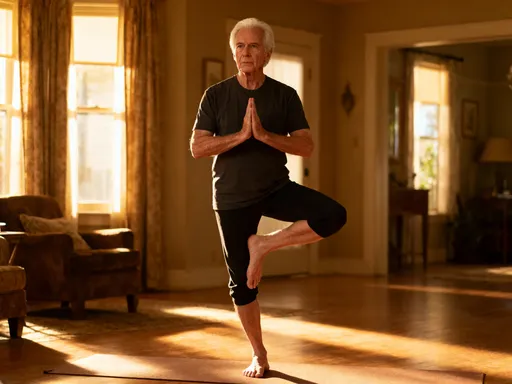
The single-leg stand is exactly what it sounds like: standing on one foot while holding onto a sturdy chair or countertop for support. I began with just 10 seconds on each leg, gradually increasing to 30 seconds as my stability improved. This exercise strengthens the muscles in the ankles, legs, and core, all of which play a role in maintaining upright posture. The heel-to-toe walk, often used in sobriety tests, is another powerful tool. Walking in a straight line with the heel of one foot touching the toe of the other challenges your ability to coordinate movement and stay centered. I practiced this along a hallway, using the wall for light support if needed.
Seated weight shifts are ideal for days when standing feels too challenging. Sitting in a firm chair, I would slowly shift my weight from side to side, then forward and back, focusing on controlled movements. This helps improve awareness of body position and strengthens the core muscles that support balance. What made these exercises sustainable was integrating them into daily habits. I did single-leg stands while brushing my teeth, walked heel-to-toe while waiting for the coffee to brew, and practiced seated shifts during commercial breaks while watching evening news. By attaching balance work to existing routines, I eliminated the need to “find” time.
Tracking progress was motivating. At first, I could barely hold a single-leg stand for 10 seconds without wobbling. After a few weeks, I noticed I could stand longer and with less sway. I also paid attention to real-life improvements: I felt more confident on stairs, more stable when turning quickly, and less hesitant when walking on carpet or tile. These small victories reinforced my commitment. Over time, I added variations like closing my eyes during single-leg stands (with support nearby) to challenge my vestibular system, or using a cushion to create an unstable surface. The key was to progress gradually and listen to my body.
Lifestyle Tweaks That Support Better Balance
While exercises are essential, I quickly learned that balance is also influenced by everyday choices. One of the first changes I made was updating my footwear. I had been wearing soft, flexible slippers around the house, not realizing they offered little support. I switched to supportive shoes with non-slip soles, even indoors. This simple change immediately improved my sense of stability, especially on hardwood floors. I also removed loose rugs and clutter from high-traffic areas and added nightlights in hallways and bathrooms to improve visibility at night.
Strength and flexibility are closely linked to balance. Weak leg muscles, particularly in the calves and thighs, make it harder to recover from a stumble. I incorporated gentle strength training two to three times a week, focusing on exercises like seated leg lifts, wall push-ups, and resistance band work. These helped build muscle without straining my joints. Stretching, especially for the calves, hamstrings, and hips, also made a difference. Tight muscles can limit range of motion and affect posture, so I began a daily stretching routine that took less than ten minutes.
Nutrition and hydration, often overlooked, also play a role in balance. Dehydration can cause dizziness and reduce blood pressure, increasing fall risk. I made a habit of drinking water throughout the day and monitoring my intake, especially in warmer months. I also paid attention to my diet, ensuring I consumed enough protein to support muscle health and foods rich in B vitamins, which are important for nerve function. Magnesium and potassium, found in leafy greens, bananas, and nuts, help regulate muscle contractions and prevent cramps. While no single food can “fix” balance, a balanced diet supports the body systems that make it possible.
Another important factor was managing my chronic condition more effectively. I worked with my healthcare provider to optimize my diabetes management, keeping blood sugar levels within a healthy range to protect nerve health. I also reviewed my medications to ensure none were contributing to dizziness or fatigue. These adjustments, combined with physical changes, created a more supportive environment for maintaining stability. I realized that balance wasn’t just about what I did in five minutes of exercise—it was about how I lived every part of my day.
When to Seek Help—And Why It’s Smart
There was a time when I thought I could handle everything on my own. I believed that if I just tried harder, I could overcome any wobble or unsteadiness. But I eventually recognized that some signs should not be ignored. Frequent stumbling, even without falling, dizziness when standing up, or a growing fear of moving around the house are all red flags. These symptoms can indicate underlying issues that require professional evaluation. Ignoring them out of pride or fear only increases risk.
Seeking help was one of the best decisions I made. I consulted a physical therapist who specialized in balance and mobility. They conducted a thorough assessment, testing my strength, coordination, and fall risk. Based on their evaluation, they created a personalized exercise program tailored to my needs and limitations. They also taught me proper techniques to avoid injury and provided feedback on my form, which I couldn’t get from online videos alone. Working with a professional didn’t mean I was weak—it meant I was taking my health seriously.
Physical therapy is not just for recovery after injury. It’s a proactive tool for maintaining function and preventing decline. Many insurance plans cover preventive care, and some clinics offer programs specifically for older adults or those with chronic conditions. In addition to physical therapy, regular check-ups with a primary care provider are essential. Vision and hearing should be tested annually, as impairments in either can disrupt balance. Foot exams are especially important for people with diabetes, as they can detect early signs of nerve damage or foot ulcers.
Asking for help is not a sign of failure. It’s a sign of wisdom. It shows that you value your independence enough to protect it. Professional guidance complements home-based efforts, ensuring that exercises are safe, effective, and appropriate for your health status. It also provides accountability and encouragement, which can be crucial for long-term success. I continue to see my physical therapist for periodic check-ins, and I recommend that anyone concerned about balance do the same.
Building a Life That Stays Steady
Over time, I’ve come to see balance not as a goal, but as a practice—a daily commitment to listening to my body and making choices that support stability. The mindset shift was profound. Instead of viewing balance exercises as a chore, I began to see them as an act of self-care, a way of honoring my body and its needs. This change in perspective made it easier to stay consistent, even on days when motivation was low.
Consistency, not intensity, is the true key to lasting results. I no longer expect dramatic changes overnight. Instead, I focus on showing up, doing a little each day, and celebrating small improvements. Some days, that means five minutes of standing on one leg. Other days, it means wearing proper shoes or taking the stairs with more confidence. These small actions accumulate, building a foundation of strength and awareness that supports every aspect of life.
I’ve also learned the value of patience and self-compassion. There are days when my balance feels off, perhaps due to fatigue or changes in my health. On those days, I don’t push harder—I adjust. I might switch to seated exercises or take extra time to move safely. This flexibility has helped me sustain the routine long-term without frustration or injury. Balance is not about perfection. It’s about awareness, adaptation, and resilience.
For other women navigating the demands of family, work, and health, I offer this: start where you are. You don’t need a gym, a trainer, or hours of free time. Begin with one minute of single-leg standing. Notice how your body feels. Pay attention to your shoes, your lighting, your posture. These small acts of awareness are the first steps toward greater stability. Over time, they add up to something powerful—the confidence to move through life without fear, the freedom to live independently, and the peace of mind that comes from knowing you are doing your best to care for yourself.
Stability isn’t something you regain overnight—it’s something you build, day by day. My journey taught me that managing a long-term condition isn’t just about medication or diet; it’s about preserving the ability to move freely and safely. By focusing on balance, I didn’t just reduce my fall risk—I reclaimed confidence in my body. This isn’t a quick fix, but a lifelong commitment to staying upright, both physically and emotionally. And that’s a journey worth every small step.